
View More Works by This Master
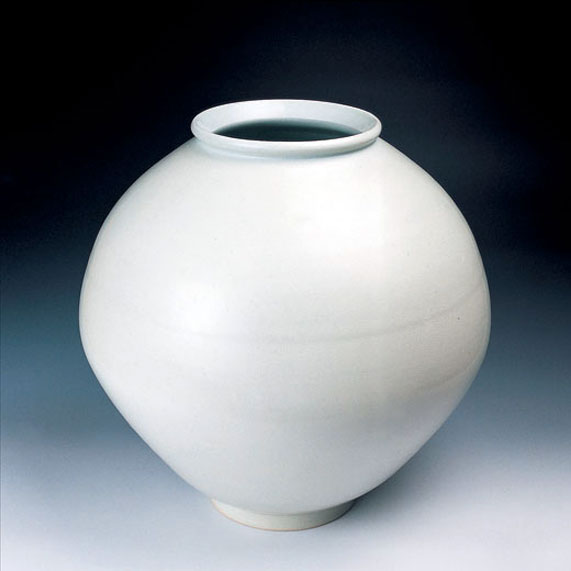
This voluminous white porcelain jar exhibits a benevolent and gracious generosity, like a full moon spreading its brilliance over a gentle hill, embracing all those bathed in its light. With its perfect global form, unique only to Korea and the Joseon Dynasty, this type of “moon jar” is often considered to be the quintessence of Joseon ceramics.
One of the greatest masterpieces by Master Potter Kim Jeong-ok, this pure white porcelain jar fascinates collectors as its color subtly changes in hue and shade when looked upon from different angles and in different lights. A river of delicately changing white color flows gently through the middle of this jar, like the Milky Way streaming through the night sky.
Showing posts with label Works by Masters. Show all posts
Showing posts with label Works by Masters. Show all posts
Sunday, April 6, 2008
“Pure White” Moon Jar

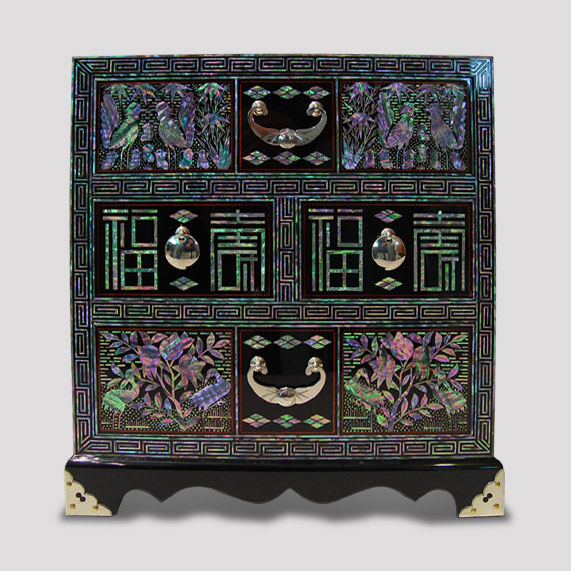
Lacquered Comb Box Inlaid with Mother of Pearl Longevity and Good Fortune Design
View More Works by This Master
Presented under the title of “A Union of Hemp Cloth, Mother of Pearl and Lacquer,” this traditional Najeon Chilgi comb box is the latest masterpiece by Song Bang-ung, Master Craftsman of Mother-of-Pearl Inlaying. Here the artist used a range of original techniques in which hemp cloth is laid upon the “skeleton” of the box before repeated applying of natural lacquer, until the fine mesh of the fabric is beautifully displayed on the surfaces.
The inlaid mother of pearl designs edged with fine copper braids, following the Goryeo Dynasty’s unique “copper braids inlaying technique,” create this exquisite comb box’s elegant beauty through the wonderful harmony of colors of copper and mother of pearl.
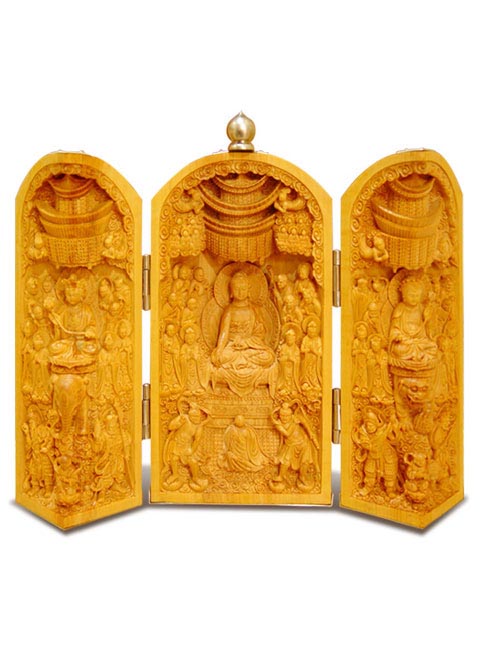
Wood Amitabha Buddha Triad in Portable Shrine
View More Works by This Master
This little Buddhist shrine, which when folded up is cylindrical in shape, is a reproduction of a portable shrine carried by a traveling Buddhist monk or nun long ago. Amitabha Budda, in the central part of the shrine, is assisted by two bodhisattvas, Munsu (or Manjusri Bodhisattva) who represents Great Wisdom, and Bohyeon (or Samantabhadra Bodhisattva) who represents Universal Virtue.
This shrine is made of torreya wood and is finished by applying fragrant jeondanhyang oil, which protects the shrine from harmful insects and decay. Also known to have been the material used for the carving of the first Buddha image in ancient India, jeondanhyang wood is more expensive than gold.
Widely regarded as one of the masterpieces by Park Chan-soo, this exquisite piece is the result of three years of arduousness, in which the artist depended on only traditional carving tools. This work of art shows the zenith of elaborateness sculpted by human hands.
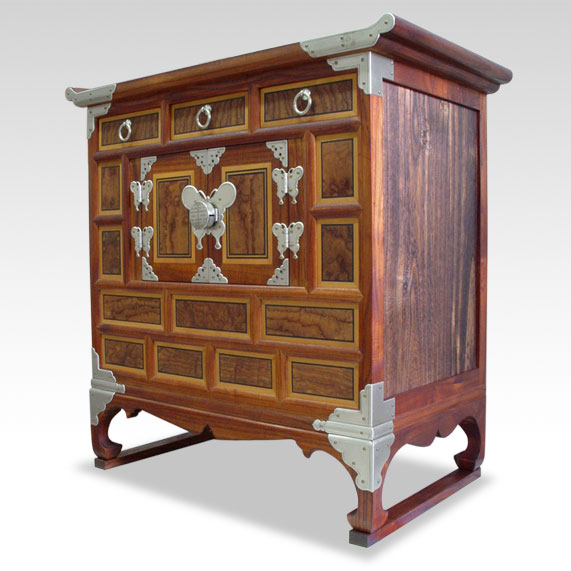
Bed Side Chest with Double Joy Ornaments
View More Works by This Master
The beauty of Korean traditional wooden furniture lies in the grain of the wood from which it is made. For Korean Master Carpenter specialized in making this type of furnishings, no artificial beauty can exceed the loveliness of what is natural. They prefer highlighting the material’s natural patterns and forms, rather than adding artificial ornaments or colors. They shun metal nails because these ‘alien’ objects can damage the wood's beauty borne from the landscape, and instead, fit the parts of the work together by making grooves and holes. The result of such meticulous methods is a fine piece of furniture, in which the dynamic, elegant lines and forms of nature are kept intact. Korean traditional furniture possesses its creator’s revered love of nature, interwoven with its exquisitely refined grace.
This fine bedside chest is made of five different types of wood fitted together using traditional techniques to create a solid structure with a fine design: Paulownia for the sides, Tree-of-Heaven for the top, Zelkova for the rest of the chest, and Black Persimmon and Ginko for the edges between rectangular figures at the front. The Paulownia sides are 'ironed' to make the natural grain more beautiful, a unique technique of Korean traditional furnishing.
The arrangement of colors and geographic patterns made of five different types of wood creates wonderful harmony with the metal butterfly ornaments, exemplifying the essence of traditional Korean furniture's beauty.
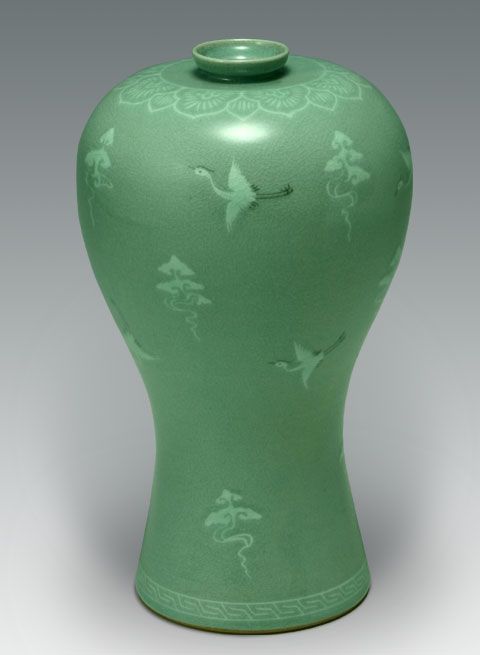
Celadon Prunus Vase Inlaid with Clouds, Cranes, and Lightning Patterns
View More Works by This Master
Korean Celadon porcelain is renowned the world over for its exquisite inlaid designs, voluminous form, elegantly-curved lines and mysterious color, the color of the sky after a rainstorm during an autumn afternoon.
This full-bodied prunus vase possessing an elegant form and the mysterious color of celadon is inlaid with white clouds and lightning patterns, as well as black and white cranes. The floating cloud and freely flying crane designs representing eternity, combined with the color of autumn sky, gives the viewer the sensation of looking at a piece of heaven.
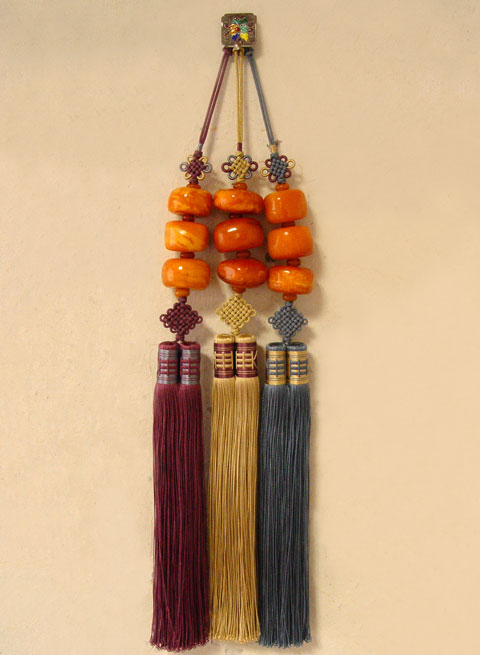
Triple-Jewel Maedeup (Korean Macrame Art) Pendant with Heavenly Amber Beads
View More Works by This Master
Norigae, or pendant trinket with a maedeup ornament, is a customary fashion item worn on the breast tie or the waist of hanbok, the traditional Korean dress. Usually Korean people preferred a pendant with an odd number of maedeup tassels, usually one and three. Three is particularly favored because it is regarded as a sacred number.
Luxuriously ornamented with three rows of triple amber beads symbolizing the 3000 heavens of Buddhism and three pairs of decorative knots of wang (a Chinese character meaning ‘king’) on the tassel heads, this type of pendant was once only worn by a queen.
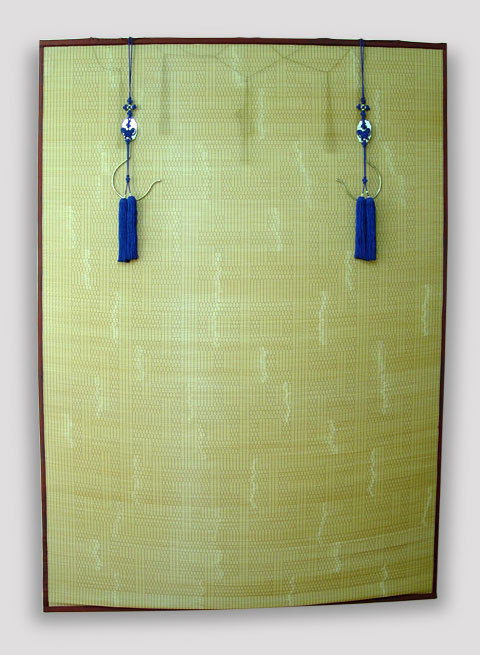
Bamboo Blind with Red Threads featuring “Double Joy” and Tortoise Design
View More Works by This Master
This exquisite traditional Korean bamboo blind is made with fine bamboo strips less than 1mm thick, often called ‘bamboo threads,’ which require extraordinary skill to produce. A normal-size blind entails a number of amazing figures: 2,500 bamboo strips; corresponding to approximately 100 bamboo canes; more than 300,000 hand movements; and about three or four months in order to complete one single blind.
The Chinese character, “Hui,” meaning “Double Joy,” surrounded by a tortoise motif is exquisitely woven with red threads into the blind. The fine bamboo strips and delicate thread weaving are unique features of Korean bamboo blinds.
By using this Korean bamboo screen, a material so magnificently woven that it is often described as bamboo silk, one can delight in the incredibly unique and serene ambiance of the dim outside view seen through the blind, the cool shade inside the house provided by the blind and the beautiful rhythmic movements of the tassel pendants that gently move in the breeze.
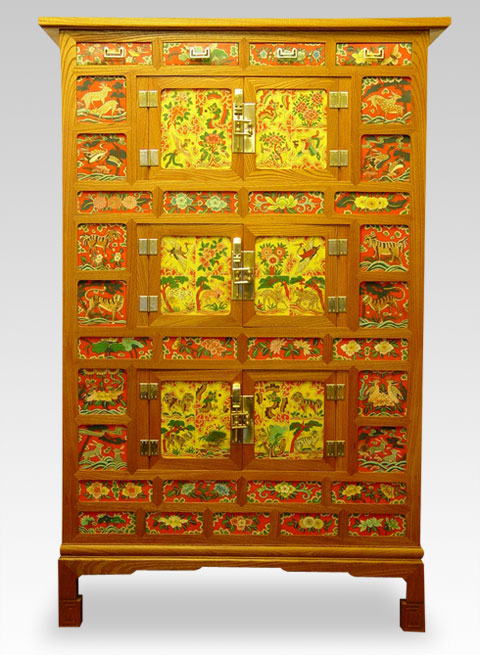
Three-tiered Cabinet Inlaid with Ox-horn Design
View More Works by This Master
This marvelous three-tired cabinet is created by ox-horn inlaying techniques solely developed in Korea. The paper-thin ox-horn pieces, brilliantly painted on the reverse side with diverse auspicious animals and plants discernible through to the foreground, were inlayed onto the surface of this cabinet to create a vivid three-dimensional effect.
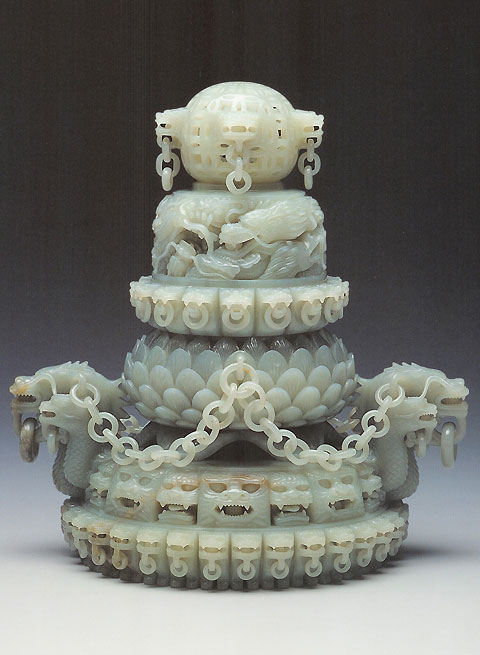
White Jade Dragon and Haetae Incense Burner
View More Works by This Master
This magnificent jade incense burner is carved with many chains and heads of dragons and Haetae, each holding a magic pearl that can roll around within its mouth when the wind blows, from a single jade block, amazingly without gluing. Each part of the piece is so finely carved with the minutest of detail that one can hardly believe it was fashioned from one stone slab.
Saturday, April 5, 2008
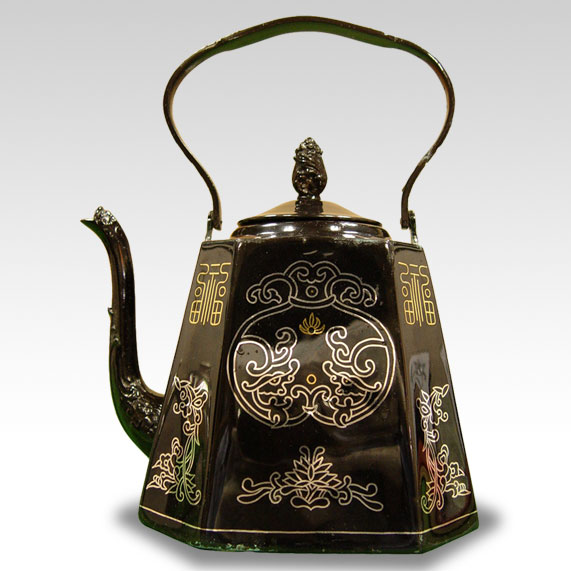
Octagonal Bronze Kettle Inlaid with Gold and Silver Phoenix and Arabesque Design
View More Works by This Master
This exquisite octagonal bronze kettle inlaid with gold and silver phoenix and arabesque design displays the fine workmanship of the silver-inlaying technique. The gold and silver wires are delicately inlaid into incised lines on this metalwork’s surface to create elegant images of phoenix, arabesque and Chinese characters meaning long life and good fortune.
Thursday, April 3, 2008
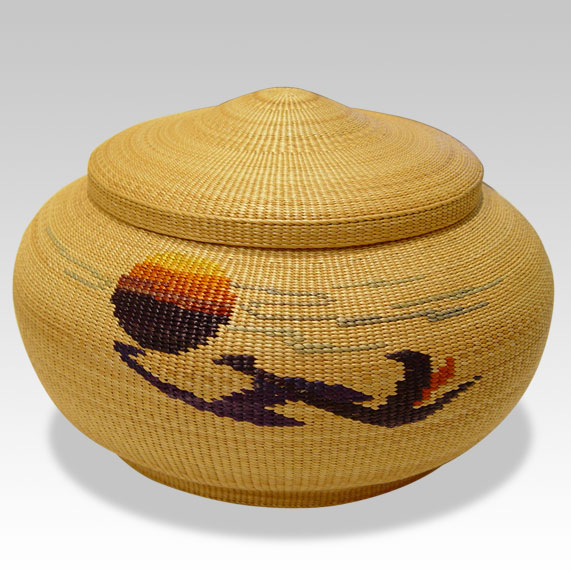
Wancho Jar and Lid with Geometric Pattern
View More Works by This Master
This delightful jar and lid by Yi Sang-jae, Master Craftsman of Wancho Weaving, is made of strips from the unique plant called Wancho, an annual reed found in rice paddies and other marshlands in some parts of Korea. Wancho is characterized by its sleek texture, milky-white color and soft but durable body, which has made it an excellent material for craft weaving for more than 1000 years. The delicate geometric design is so finely woven that it seems unbelievable that it was made by human hands.
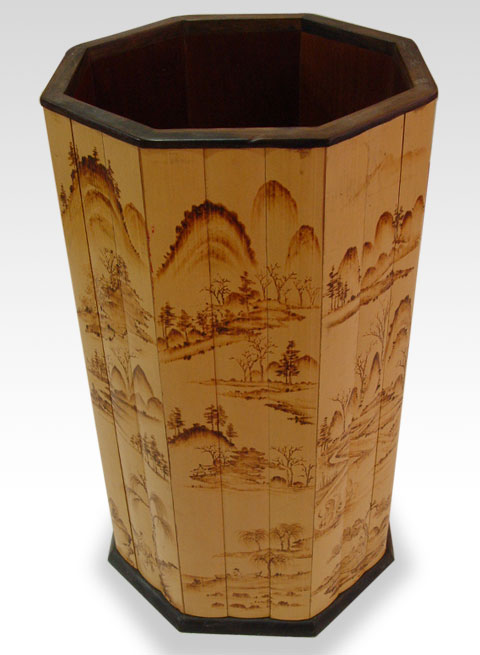
Octagonal Nakjuk (Bamboo Pyrography) Brush Holder with Landscape Designs
View More Works by This Master
The landscapes drawn in the nakjuk technique by Kim Gi-chan, Master Craftsman of Nakjuk (Bamboo Pyrography), on the brush holder’s eight faces display masterful skills and great artistry. The setting of mountains and rivers where people stroll in perfect harmony with the trees and birds fascinate viewers and seem to depict a serene utopian world where Taoist saints reside.
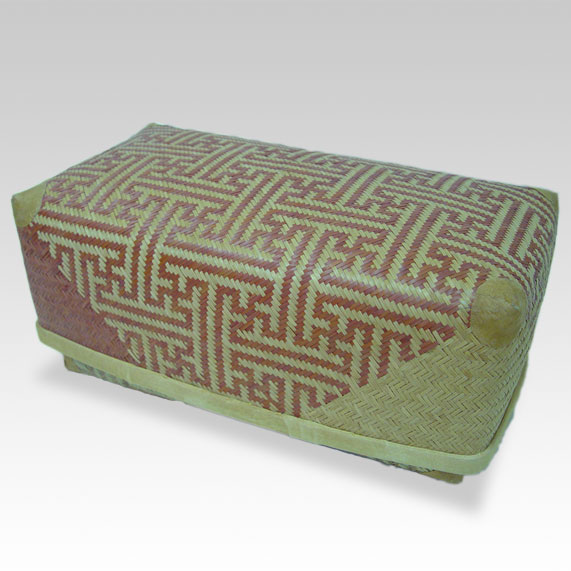
Hemp Cloth Chaesang (Colorful Korean Bamboo Box)
View More Works by This Master
This unique bamboo box called Chaesang, literally meaning "colorful box," by Seo Han-gyu, Master Craftsman of Chaesang, is woven with paper-thin but iron-strong bamboo strips cut from three-year-old bamboo trees in winter. The tranquility and harmony of colors and textures within the dynamic movements of the several hundred bamboo strips used to create this container are so complete, that it displays breathtaking artistry.
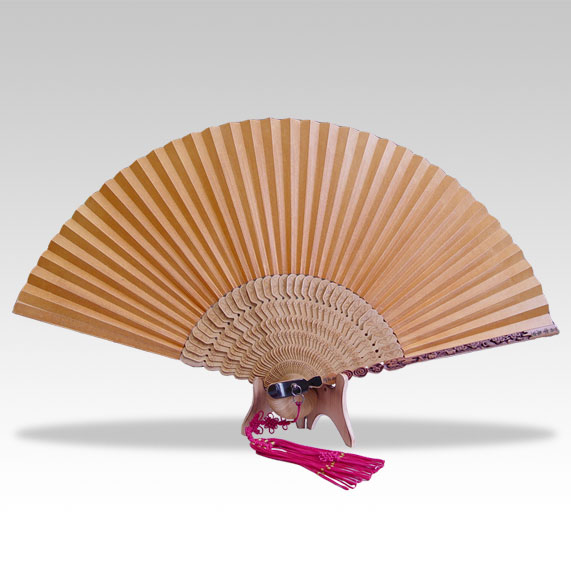
Seven-tier Arcs Hwangchil (Korean Yellow Lacquer) Folding Fan
View More Works by This Master
This magnificent paper bamboo fan by Yi Gi-dong, Master Craftsman of Fans, made of the best-quality Korean mulberry paper coated with hwangchil (‘yellow lacquer’) expresses the elegant beauty of the golden color. The intricate pyrography bat design engraved on the bamboo ribs create a wonderful harmony with the beautiful lines made by the wide breadth of the unfolded fan’s outline and the attractive three-dimensional creases of the paper arranged neatly.
Korean mulberry paper called hanji is extremely light and strong, and maintains its original color and shape even after a millennium. Featuring glossiness, softness, and a high capacity for upholding warmth and ventilation, the paper has been considered as the ideal material for windows, doors and walls.
Another element to add attraction and beauty to a Korean fan is the use of hwangchil ('yellow lacquer'), a natural lacquer taken from a Korean native lacquer tree. This golden translucent pigment creates mysteriously elegant colors. Not only its attractive rare golden hue, but also the sweet natural fragrance emanating from it adds delightful joy to the users of Korean fan.
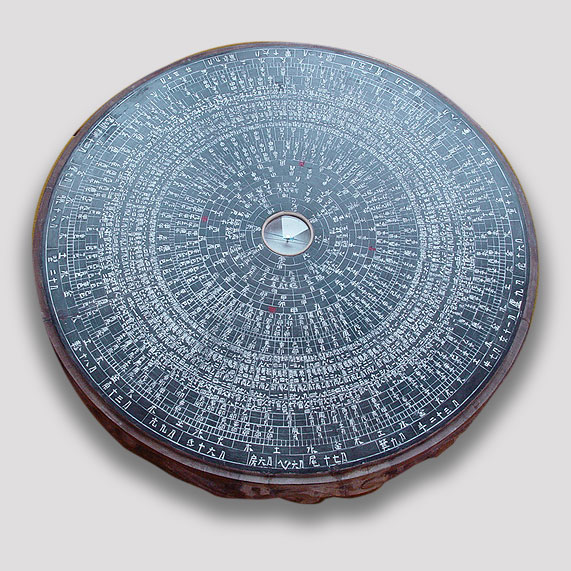
24-tier Circular Yundo (Korean Compass)
View More Works by This Master
The main material of this extraordinary compass by Kim Jong-dae, Master Craftsman of Yundo, is solid Jujube wood more than 200 years old that does not contain any knots. It includes the four cardinal directions, eight trigrams in ‘I Ching’ that describe fortunes, the 10 Heavenly Stems, the 12 Earthly Branches symbolizing 12 warrior deities in Taoism who protect the Earth, and 24 solar terms.
Each of the characters carefully inscribed onto the front surface of this wooden compass carries, in addition to profound meaning, unique personality interwoven with mysterious energy. As well, the arrangement of characters laid out in perfect order displays wonderful geometrical beauty.
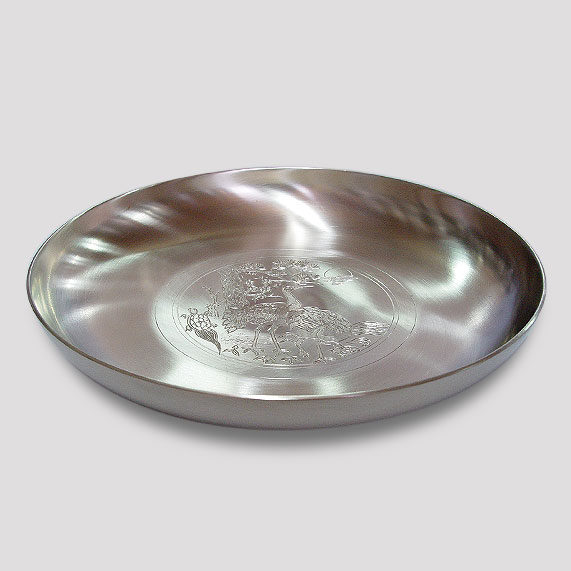
Bronze Dish with Long-life Emblem Design
View More Works by This Master
This splendid bronze dish by Yi Bong-ju, Master Craftsman of Bronzeware, was created by several thousand beats of a hammer. After the alloy of copper and tin passes through the door of secrets through the long process of forging, the result is an exhibition of beauty that manifests the glorious brilliance of gold.
The bronze items made in this fashion are only known to exist in Korea, where the art was used for creating the highest-quality kitchen utensils for the royal households and aristocratic families.
A piece of Korean bronze ware like this one demonstrates the remarkable feature of changing color if it touches poisonous substances, such as chemicals, in food; thus, it keeps food fresh for a long period of time and even kills harmful bacteria that cause food poisoning. The amazing capacity of this utensil has even been proved by a recent scientific test.
Subscribe to:
Posts (Atom)
